Dealing with Builders in Kerrville & The Texas Hill Country
Building a custom home in the Texas Hill Country is one of the most rewarding investments you can make, but it also demands careful planning, the right builder, and a clear understanding of what makes this region unique. From the rugged limestone terrain around Kerrville to the rolling pastures near Fredericksburg and Comfort, every lot presents its own set of opportunities and challenges that shape the home you’ll ultimately live in.
The difference between a home that performs beautifully for decades and one that reveals shortcuts within a few years almost always comes down to the builder you choose and how they manage the details.
Kerrville’s growing reputation as a destination for custom residential construction means you have options, but not all builders operate the same way. Some coordinate subcontractors from a distance. Others keep critical trades like finish carpentry in-house so quality never leaves their hands.
Follow along to know what to look for in a Hill Country custom home builder, how to plan for the realities of building in this landscape, and which questions to ask before you sign a contract. Whether you’re relocating from a major metro or building a forever home on family land, the information here will help you make sharper decisions from day one.
What Sets A Strong Local Builder Apart
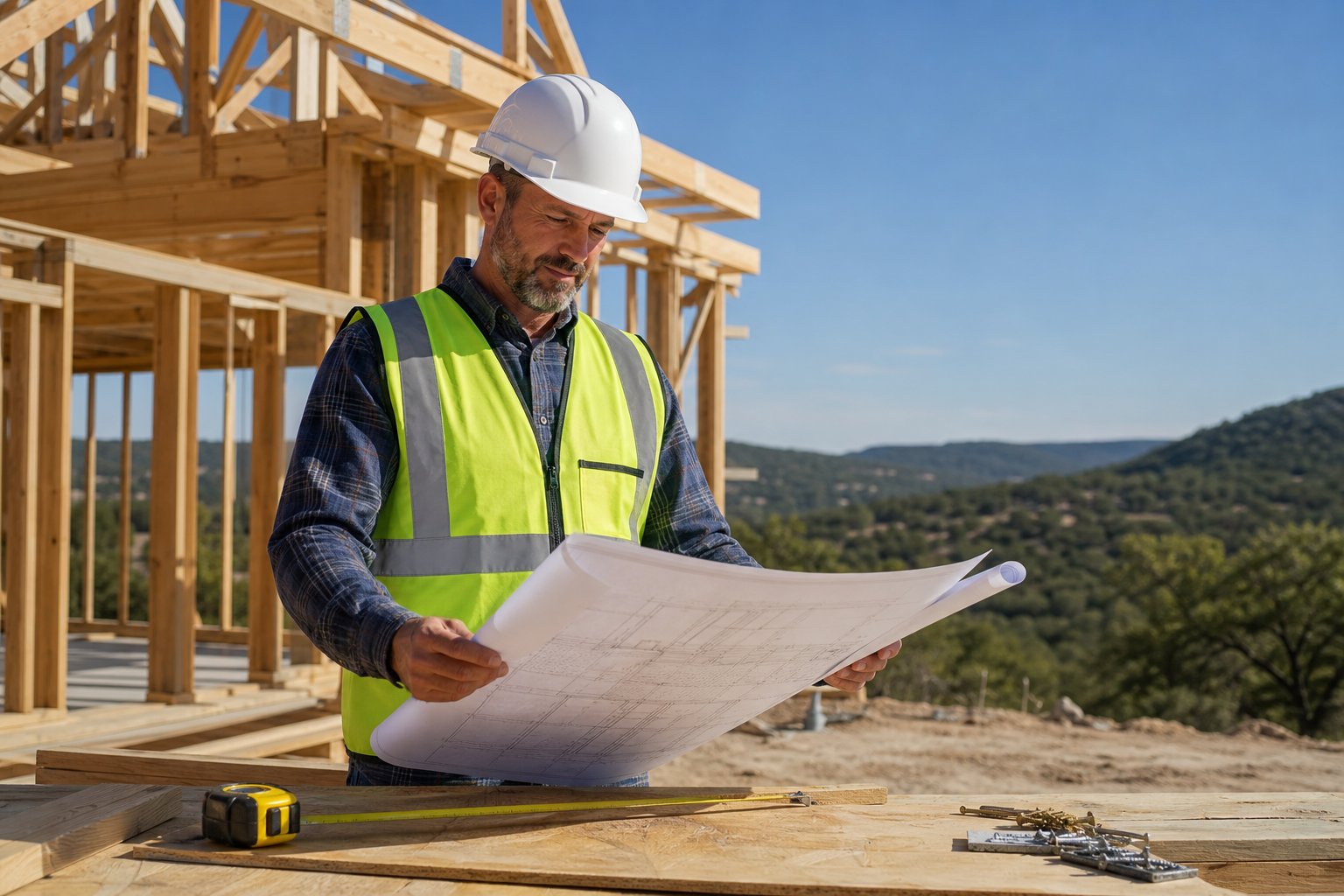
A strong Kerrville custom home builder brings more than a license and a crew. The best ones combine general contracting oversight, genuine craftsmanship, and transparent communication into a single experience that protects your budget, timeline, and sanity.
General Contracting Oversight Vs. Trade Coordination Gaps
When your builder acts as a true general contractor, they own the schedule, manage every trade, and take responsibility when something goes sideways. This is different from a builder who simply hands out subcontractor assignments and hopes each crew shows up on time.
In Hill Country construction, coordination gaps become expensive fast. If your concrete crew pours a foundation before the plumber finishes rough-in, you’re looking at costly rework. A builder with tight oversight catches conflicts in the schedule before they hit the jobsite.
Ask prospective builders whether they maintain daily jobsite presence. The answer tells you a lot about how problems get solved.
Why In-House Craftsmanship Matters In Custom Work
Some builders outsource virtually everything. Others, like Brown Contracting, keep critical work such as finish carpentry on their own payroll. The practical advantage is consistency. When the same crew handles your crown molding, built-in cabinetry, and trim work, you get a unified quality standard rather than a patchwork of different skill levels. This makes for a smoother custom home construction project for sure.
In-house craftsmanship also means faster turnaround on punch-list items. You’re not waiting for a subcontractor to schedule a return trip; the builder’s own team handles corrections directly.
As noted by White Construction Company, working with craftsmen who share a dedication to excellence ensures each home receives proper attention to detail.
How To Read Reviews For Communication, Trust, And Follow-Through
Star ratings tell you something, but the text of reviews tells you more. Look for patterns rather than individual comments. Do multiple clients mention that the builder kept them informed during the project? Do they describe the pricing as fair and the crew as respectful of the property?
Pay special attention to reviews from out-of-town homeowners. If a builder earns trust from someone who can’t visit the jobsite regularly, that speaks volumes about their communication habits. Repeat clients and referrals from other builders are also strong trust signals that generic advertising can’t replicate.
Planning A Home For Kerrville And The Texas Hill Country
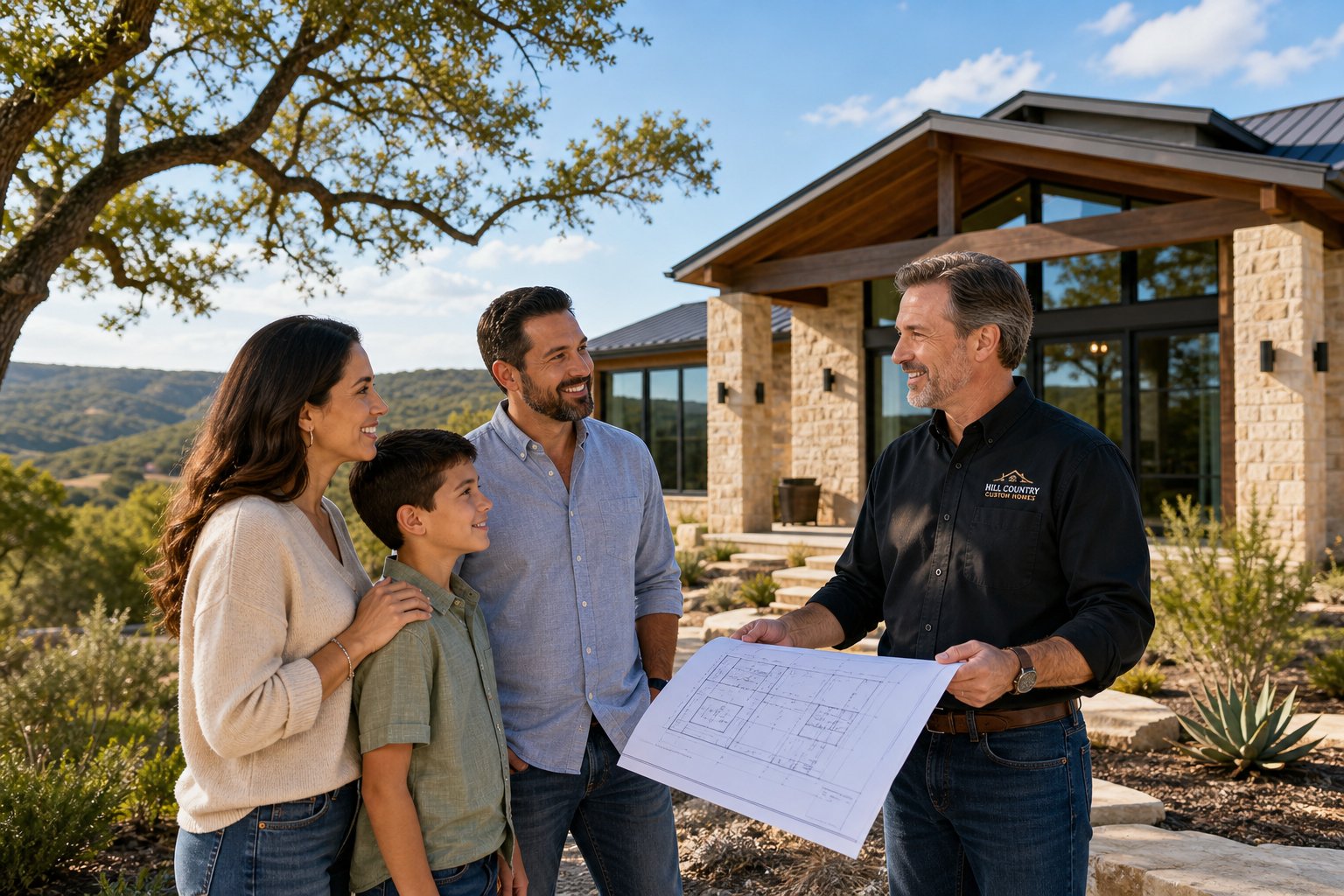
Building in the Hill Country isn’t the same as building on a flat suburban lot in Dallas or Houston. Your site, your style priorities, and even your choice of town will influence everything from foundation costs to how your home feels ten years from now.
Lot Conditions, Terrain, And Site Preparation
Much of the land around Kerrville sits on limestone and caliche. That means you’ll likely encounter rock during excavation, which can add to your foundation and utility trench costs. A builder with local experience will flag this during the lot evaluation stage rather than surprising you with change orders later.
Slope matters, too. A gentle 5% grade handles differently than a steep hillside lot overlooking the Guadalupe River. Retaining walls, drainage engineering, and driveway grades all require careful planning. Your builder should walk the lot with you before design work begins and discuss realistic site preparation costs.
Septic systems are common outside city limits. The Kerr County permitting process requires soil testing and proper setbacks, so factor that timeline into your early planning.
Regional Style Priorities And Everyday Livability
Hill Country homes tend to favor a blend of natural stone, metal roofing, and generous outdoor living spaces. You’ll see influences ranging from Texas ranch vernacular to modern farmhouse and contemporary designs. But style should serve your daily life, not just look good in photos.
Think about how you’ll actually use covered porches, how prevailing breezes move through the site, and where the sun hits during summer afternoons. Orientation decisions made early in design pay dividends in comfort and energy costs for decades. As UrbanLUX Builders notes, custom builds that integrate the outdoor context, including covered porches oriented to the view, hold value at resale.
Energy efficiency matters in a region where summer temperatures routinely exceed 100°F. Discuss insulation strategies, window placement, and HVAC sizing with your builder early.
How Kerrville Compares With Fredericksburg, Comfort, And Boerne
Kerrville offers a balance of small-town atmosphere and practical infrastructure, including a regional hospital, grocery options, and proximity to the Guadalupe River. Land tends to be more affordable per acre than in Fredericksburg, where tourism-driven demand has pushed prices higher.
Comfort appeals to buyers who want a quieter setting with easy access to I-10. Boerne sits closer to San Antonio and attracts commuters who want Hill Country living without giving up metro amenities. Communities like Comanche Trace in Kerrville offer master-planned options with preferred builder programs.
Each town has its own permitting nuances and utility availability. Your builder should know these differences firsthand rather than learning them on your project.
From Design To Final Walkthrough
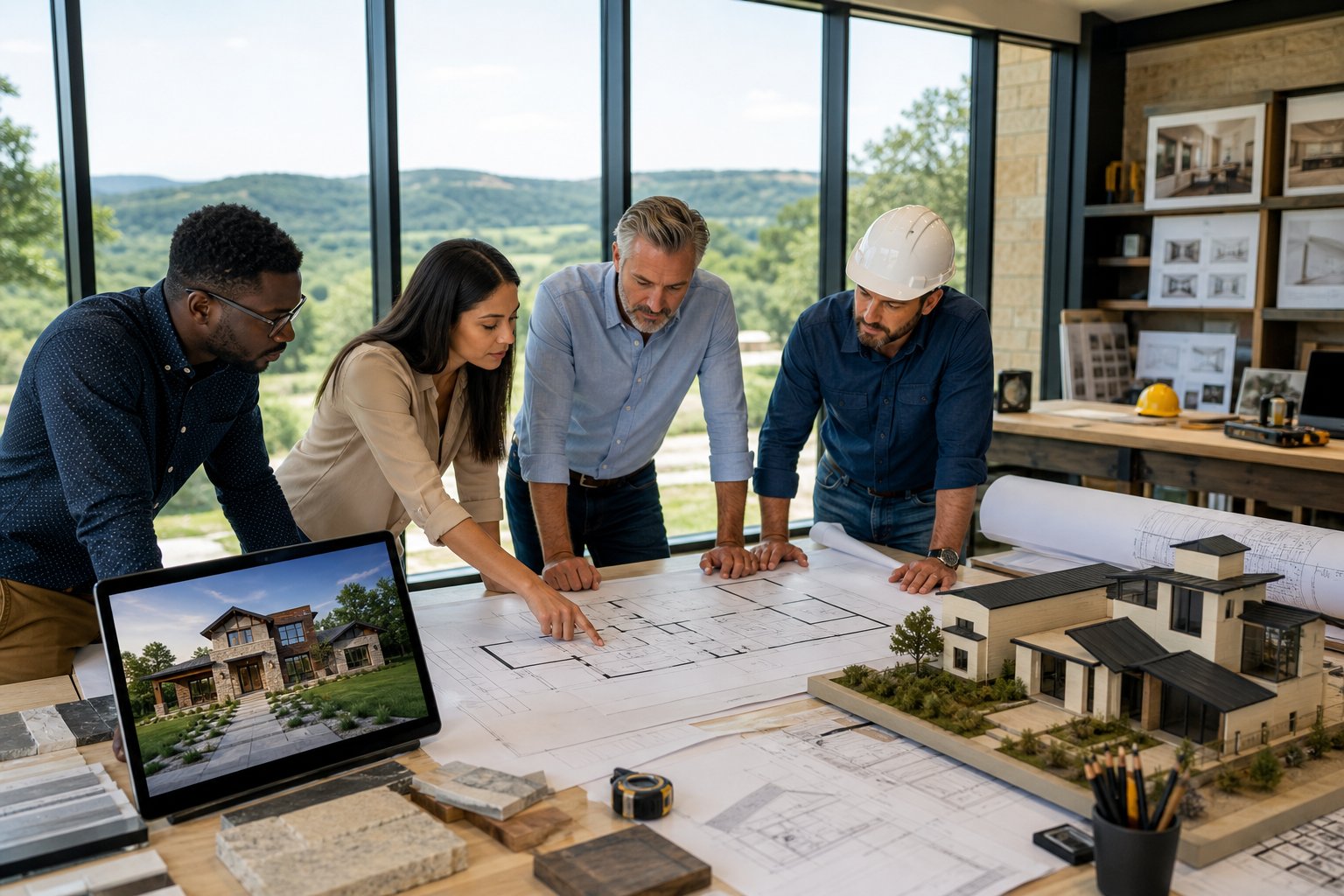
New construction follows a progression from concept to completion that typically spans 10 to 18 months for a custom home in the Hill Country. Knowing what to expect at each stage reduces stress and helps you make better decisions under pressure.
Working With An Architect Or Design Partner
Some builders have in-house design capabilities. Others work alongside independent architects or can connect you with a design partner they trust. Either approach works, but clarity on roles matters. Your architect focuses on the vision; your builder focuses on buildability and cost.
The best outcomes happen when your builder joins the design conversation early. They can flag structural concerns, material lead times, and budget implications before plans are finalized. As Riverside Home Designs in Kerrville advises, understanding the relationship between designer and builder before hiring either one saves you from costly mid-project changes.
If you already have an architect, confirm that your prospective builder is comfortable executing someone else’s plans. Not every builder excels at this.
Budgeting, Scheduling, And Change Management
Set a realistic budget range before you finalize plans, and build in a contingency of 10-15% for unknowns. Rock excavation, supply chain delays, and design changes are common in Hill Country projects. A transparent builder will give you a detailed line-item estimate rather than a single lump sum.
Scheduling depends on weather, material availability, and trade sequencing. Ask your builder how they handle delays and what their communication protocol looks like when the timeline shifts. The builders with the strongest reputations don’t avoid delays entirely; they manage them honestly and keep you informed.
Change orders are inevitable in custom work. Establish upfront how changes will be priced, documented, and approved. Written processes protect both sides.
What Homeowners Should Expect During Construction
You should plan for a pre-construction meeting, regular progress updates, and milestone walkthroughs at key stages like framing completion, rough-in inspections, and pre-drywall review. These checkpoints give you visibility into what’s behind the walls before finishes cover everything up.
Expect noise, dust, and temporary disruptions if you’re living nearby. Good builders communicate schedules so you know when heavy equipment or large deliveries are expected.
Your final walkthrough is your opportunity to identify punch-list items. Walk every room slowly. Open every cabinet. Test every switch. A builder who welcomes this process rather than rushing through it is a builder who stands behind their work.
Where Quality Shows Up In The Finished Home
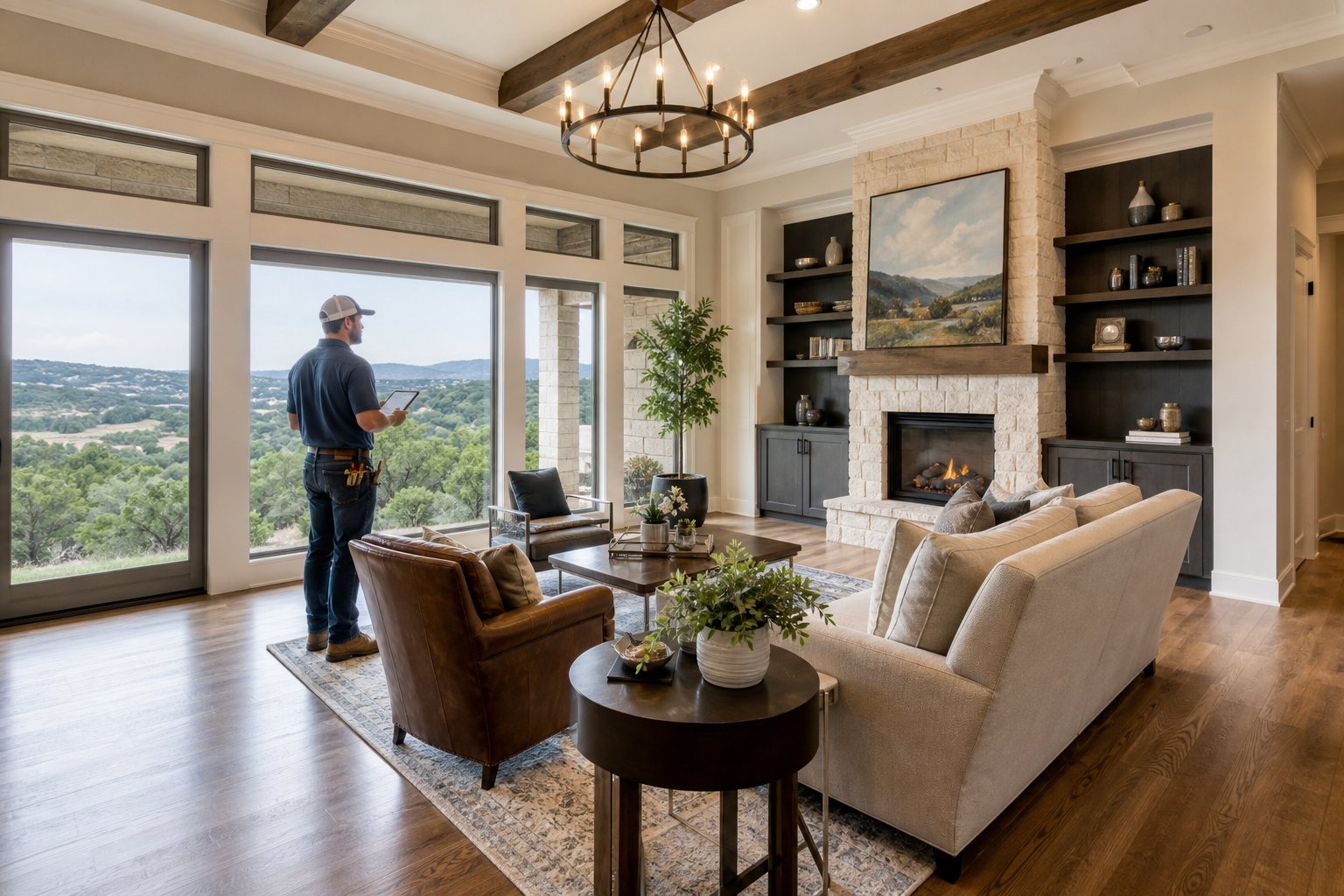
Craftsmanship reveals itself most clearly in the details you see and touch every day. Structural work matters enormously, but it’s the finish elements that determine whether your home feels custom or cookie-cutter.
Trim, Built-Ins, And The Importance Of Finish Carpentry
Finish carpentry is where a home’s personality takes shape. Crown molding, wainscoting, built-in shelving, and custom closet systems all require precise measurement, clean joints, and an eye for proportion. This is also the area where cost-cutting shows up fastest, through misaligned miters, gaps at seams, and trim that doesn’t sit flush.
Builders like Brown Contracting keep finish carpentry in-house specifically because outsourcing it introduces variability. When the same crew that understands the house from framing forward handles the trim, continuity shows in every room.
If finish carpentry matters to you, ask your builder directly: Who does your trim work, and are they on your payroll?
Flooring, Doors, Beams, And Interior Detail Work
Flooring installation requires a flat, properly prepared subfloor and careful acclimation of materials. Hardwood that’s installed before it adjusts to Hill Country humidity levels will gap or buckle. Experienced builders know this and build acclimation time into the schedule.
Interior doors, exposed ceiling beams, and barn doors are increasingly popular in Hill Country homes. Each element needs proper hardware, alignment, and structural support. A beam that looks rustic but isn’t properly anchored is a liability, not a feature.
Custom millwork ties the home together visually. Consistent wood species, stain matching, and proportional sizing across elements like door casings, baseboards, and window trim create a cohesive feel that’s hard to achieve when multiple unrelated crews handle different pieces.
How Final Details Affect Long-Term Satisfaction
The details you notice during your first week in the home are the same ones you’ll notice five years later. Tight joints in your crown molding, drawers that close smoothly, and doors that latch without sticking all contribute to daily satisfaction.
Poor finish work, by contrast, becomes more noticeable over time as materials expand and contract through seasonal temperature swings. A gap that’s barely visible at move-in can widen into something you see every morning.
Investing in quality craftsmanship at the finish stage isn’t a luxury. It’s a long-term value decision that affects both your enjoyment and your home’s resale appeal.
Questions To Ask Before Hiring
Choosing a custom home builder is a significant financial and personal commitment. The right questions, asked before you sign anything, reveal whether a builder’s process and values align with yours. According to KC Custom Homes, these conversations are essential for every homeowner building in the Texas Hill Country.
Who Manages The Jobsite Day To Day
Find out whether the builder or a dedicated project manager will be on-site regularly. Ask how often they visit the jobsite and who your primary point of contact will be for questions and concerns.
A builder who delegates jobsite management to a rotating cast of foremen may struggle with consistency. You want one person who knows your project inside and out and can make real-time decisions.
How The Builder Handles Timelines And Subcontractors
Ask for a projected construction timeline with milestones. Then ask what happens when a subcontractor falls behind or doesn’t show. A good builder will describe specific backup plans rather than vague reassurances.
You should also ask how many projects they run simultaneously. A builder juggling too many jobs at once may not give yours the attention it deserves. As outlined by Angi’s guide to hiring home builders, your builder’s delay management plan directly affects your realistic completion date.
What To Confirm About Scope, Pricing, And Communication
Request a written scope of work and a detailed estimate before signing a contract. Confirm how change orders are handled, including pricing, approval process, and impact on the schedule.
Ask about the builder’s communication cadence. Weekly updates? Daily photo logs? A shared project management tool? The method matters less than the consistency. Also confirm warranty coverage, specifically what’s included, how long it lasts, and how service requests are handled after move-in.
Choosing The Right Fit For Your Project
The best custom home builder for your project isn’t necessarily the biggest or the one with the flashiest portfolio. It’s the one whose strengths match your specific needs, priorities, and comfort level.
Matching Builder Strengths To Your Home And Priorities
Every builder has a wheelhouse. Some excel at large-scale luxury homes with complex architectural features. Others specialize in efficient, well-crafted homes in the 2,000 to 3,000 square foot range. Companies like Big Country Construction focus on homes built around your lifestyle with deep knowledge of local land and permitting.
Review past projects that are similar to yours in size, style, and budget. Ask for references from clients who built a comparable home, not just their showpiece project.
When A Remodeler’s Skill Set Overlaps With Custom Building
Don’t automatically rule out a builder with a strong remodeling background. Remodelers who also build custom homes often bring a problem-solving mindset and fine-detail focus that pure new-construction builders sometimes lack.
A company like Brown Contracting, for example, handles full-scale remodels and custom builds while maintaining in-house finish carpentry. That combination means they’ve worked through the trickiest scenarios in existing structures and bring that same precision to new construction.
The overlap between remodeling craftsmanship and custom building is a strength, not a compromise.
Why Hands-On Execution Can Matter More Than Size
Large firms offer resources. Small, hands-on builders offer direct accountability. In the Hill Country market, many of the most respected builders operate with lean teams and a personal presence on every project.
When your builder is the same person reviewing your trim details, walking your framing inspection, and answering your calls, decisions happen faster and quality stays consistent. Element DBR in Kerrville and several other local firms operate with this model, serving as a single point of responsibility from design through completion.
Size doesn’t guarantee quality. Craftsmanship, communication, and follow-through do. Choose the builder who demonstrates all three.